
Royal Bengal Tiger
The mangrove tiger of the Indian Sundarbans — behaviour, sightings, and why this population is globally unique.
Last updated
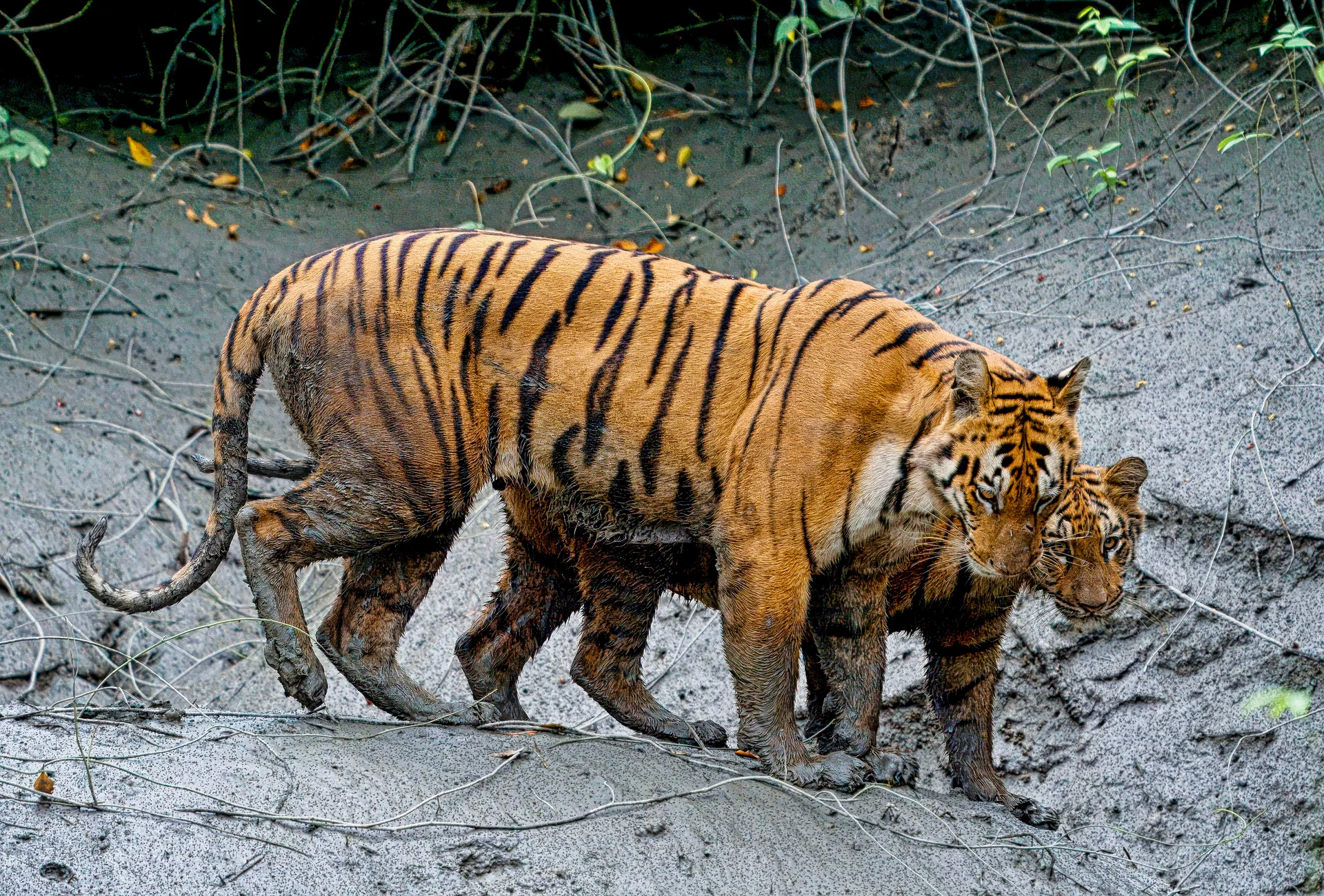
Panthera tigris tigris · IUCN Endangered
The tiger here does not cross a jeep track. It slips through gewa shade, swims a channel you thought was empty, and vanishes into roots that breathe with the tide. That is why the Sundarbans feels enigmatic — the cat is present in every safety briefing and rarely present in your viewfinder.
Only mangrove tigers on Earth
India’s Project Tiger reserve network includes deserts, grasslands, and sal forests. Only here does the flagship species live entirely inside a mangrove–estuarine maze. Forest outreach calls this the world’s sole tiger–mangrove habitat. UNESCO and Ramsar labels describe the wider values. For you, the practical meaning is simple: all observation happens from boats and approved camps, not from walking safaris.
Behaviour visitors should understand
- Swimming between islands is normal for these tigers — never enter the water.
- Deer at ponds near towers are prey; tigers may approach at dawn or dusk while boats are elsewhere.
- Human–tiger conflict is managed through village fencing, patrols, and strict tourism routes — not through chasing cats for photos.
- Monitoring uses camera traps, patrol data, and national census cycles. We do not repeat headline tiger counts without naming the survey year. See conservation & climate.
Where routes overlap habitat
Permitted boat days link Sajnekhali, Sudhanyakhali, Dobanki, and longer stops such as Netidhopani when your itinerary includes them. Guides read mud for pugmarks and listen for alarm calls from deer or monkeys.
Stay seated in the boat unless cleared for a camp walkway. Never feed wildlife. Read tour guidelines for permit and boat rules.
Wildlife overview · Spotted deer · Culture — tigers in local life
Frequently asked questions
- How is the Sundarbans tiger different from tigers in other Indian parks?
- These cats live in tidal mangrove creeks, swim between islands, and hunt in soft mud where humans cannot walk. They are the only wild tigers in a mangrove ecosystem. They are often described as smaller and more elusive than some inland populations, with behaviour shaped by water and salinity.
- What are the chances of seeing a tiger on a safari?
- Low on any single day. Many guests leave with paw prints, a local story, or nothing at all. Deer, birds, and crocodiles are the usual visual rewards. Operators who promise guaranteed sightings are not being honest.